📜 The Hutterite Story
Five Centuries of Faith,
Community and Agriculture
From the mountains of Tyrol in 1528 to roughly 6 million acres across North America: the 500-year story of the Hutterites.
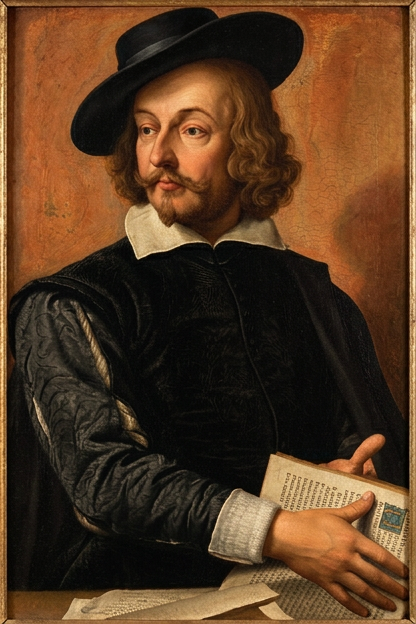
Jakob Hutter (c.1500–1536)
Founder of the Hutterites
AI-enhanced from historical engraving
The Man Behind the Name
Born ~1500 in Moos, South Tyrol (now Italy) — hatmaker by trade.
Converted to Anabaptism, began preaching in the Puster Valley.
1533— Moved to Moravia, unified scattered Anabaptist communities.
Organized the first Bruderhofs — communal living based on Acts 2:44: “All things in common.”
November 1535— Arrested at a safe house in Klausen.
Tortured for months — refused to name a single member of his community.
February 25, 1536— Burned at the stake at the Golden Roof, Innsbruck. Aged ~36.
His followers carried his name — Hutterite — across 500 years, four continents.
“Come closer, those of you who contradict me. Let us test our faith in the fire.”
— Jakob Hutter, February 25, 1536
“We have been persecuted for our beliefs, for our way of life,
for caring for our neighbours, for ensuring no one goes hungry
or is left without care.We chose community over conflict.
We chose the plough over the sword.
We chose to feed the nation rather than fight it.Five centuries of persecution could not break what God built in us.
We remain pacifists. We remain farmers.
We remain a people who believe that every table should be full
and every neighbour cared for.Blessed are those who understand us.
Blessed are those who eat from our fields.”
Historical Illustration · Anabaptist Era · Circa 1530s
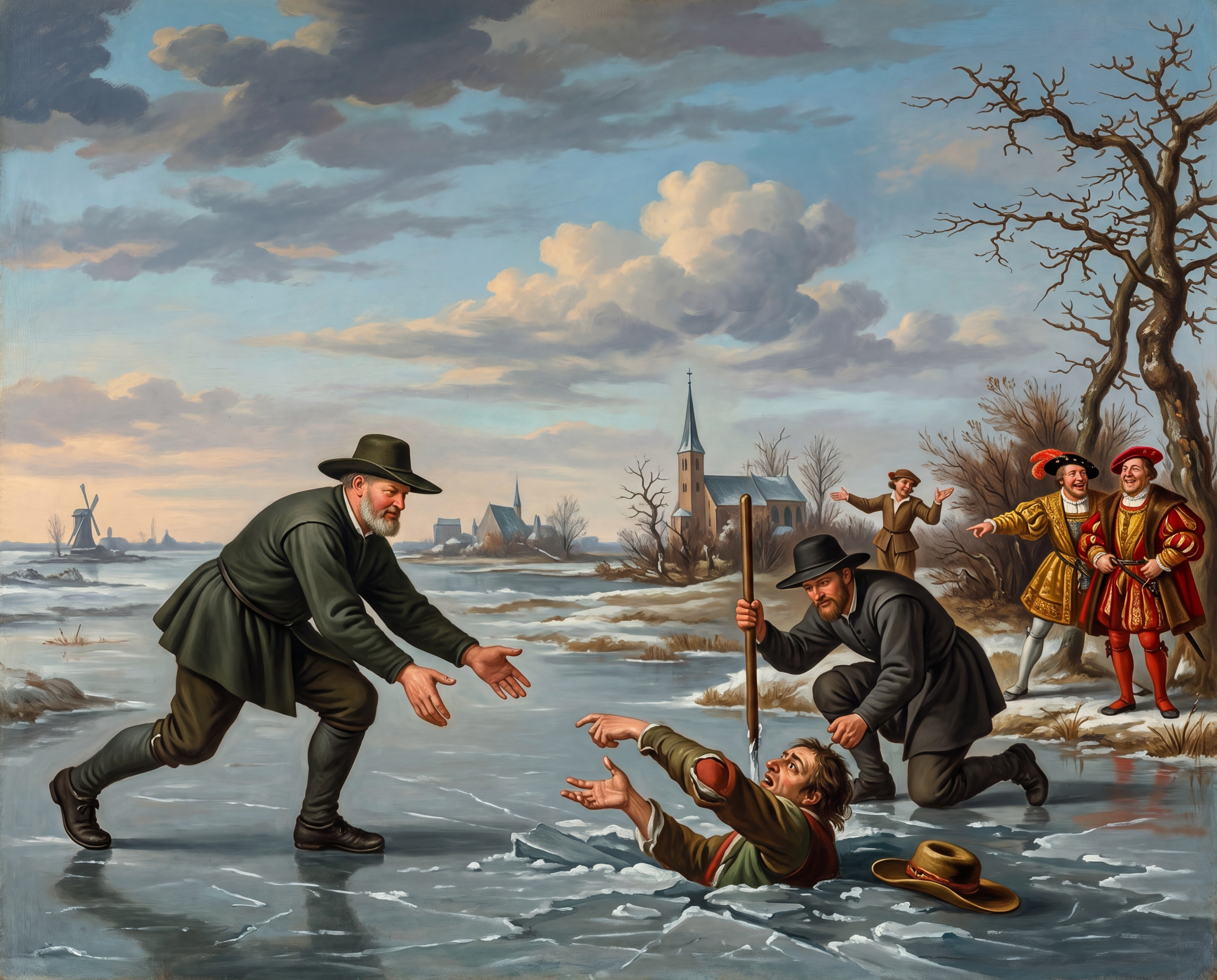
When others mocked, they reached out their hand.
Hutterite Anabaptists rescue a stranger from the ice while the wealthy stand by and laugh. Community over conflict. Help over hatred. This has been their way since 1528.
Timeline
500 Years of the Hutterites
From the founding in Austerlitz to the modern colony directory of 2026.
The Beginning
A small band of Anabaptist refugees fleeing Tyrol settles in Austerlitz, Moravia. On the road they place a cloak on the ground and pool everything they own — the founding act of the community of goods, drawn from Acts 2:44: "All things in common."
The Martyr
Jakob Hutter, the hatmaker-turned-leader who unified the scattered Bruderhofs into a single church, is arrested in November 1535. He refuses to recant under torture and is burned at the stake on February 25, 1536, at the Golden Roof in Innsbruck. His followers carry his name across the centuries.
Near Extinction
Three centuries of war and persecution culminate in the Thirty Years’ War. The community is driven from Moravia to Slovakia to Wallachia to Transylvania, losing thousands. By the late 1600s the community of goods has all but collapsed — only a handful of families still remember the way.
Russian Refuge
Catherine the Great’s invitation to colonise the southern Russian steppe gives the surviving Hutterites a century of peace. In Vishenka and later Radichev they restore the Bruderhof, rebuild the schools, and carefully copy the old chronicles by hand. By the 1860s three branches emerge — Schmiedeleut, Dariusleut, Lehrerleut.
North American Arrival
When Russia ends the Hutterites’ military exemption, every Bruderhof emigrates to the Dakota Territory. Three founding colonies — Bon Homme (Schmiedeleut), Wolf Creek (Dariusleut) and Old Elmspring (Lehrerleut) — are established along the James River. Every Hutterite alive today descends from these three colonies.
The Great Canadian Migration
American conscription during World War I leads to the death of Joseph and Michael Hofer at Alcatraz and Leavenworth. Within months, all but one Hutterite colony in the United States picks up and moves to Canada — to Manitoba, Saskatchewan and Alberta — where the federal government has guaranteed military exemption.
Alberta Discrimination
Alberta passes the Communal Property Act, restricting where Hutterites can buy land and how large a colony can be. The act stays on the books until 1973. During the same period, several US states pass similar laws targeting communal landholding. The community pushes through, splitting daughter colonies wherever they can.
Prairie Expansion
Mechanisation, hog and poultry barns, large dairy operations and feed mills transform colony economies. Population doubles every 17 years. New daughter colonies are established at the rate of three or four a year. By 1990 the community owns more than 4 million acres of prairie farmland.
Today
574 colonies. 59,228+ people. Roughly 6 million acres farmed across British Columbia, Alberta, Saskatchewan, Manitoba, Montana, North and South Dakota, Minnesota, Washington and Oregon. The largest community of goods on earth — still living the same way Jakob Hutter taught in 1533.
The story continues today.
574 colonies. 59,228+ people.
~6 million acres.
One community of goods, still living the way Jakob Hutter taught.